
Biznaga - 10-4-2025 at 03:32 PM
How many of you salty "older" Nomads remember hearing about Hurricane Liza, back in September of 1976? I'm curious, were any of you in or around the
La Paz area after this storm hit and devastated the city and surrounding communities?
Here's some info from the article linked below;
"Hurricane Liza was a powerful, deadly and devastating Pacific hurricane which caused the worst natural disaster in the history of Baja California
Sur. Liza brought heavy rainfall to the area, which caused significant flash flooding. Following a dam burst by the El Cajoncito Creek along the
outskirts of La Paz, hundreds of people were swept away by flood waters. In La Paz, the capital of the state, 412 people died and 20,000 were left
homeless. Nearly one third of the homes in the town were destroyed."
"...newspaper accounts claim that 11.8 in (300 mm) fell (more than a year's worth of rainfall) in some areas in a mere 3 hours. Moreover, 22 in (559
mm) was measured in El Triunfo and San Antonio, along the southern portion of the peninsula. In La Paz, Baja California Sur, a storm surge of 8 ft
(2.4 m) was reported."
Between all the innocent lives lost in southern Baja, at sea and on the mainland, this hurricane killed 1,263 people. If you were in Baja during or
after this hurricane, please share what you can remember with the rest of us. More details about this tragedy are in the link below;
https://en.wikipedia.org/wiki/Hurricane_Liza
may they all rest in eternal peace...
Tioloco - 10-4-2025 at 04:06 PM
That makes the hurricanes we have seen in the last 20 years seem pretty tame in comparison.
4x4abc - 10-5-2025 at 11:16 AM
Hurricane Liza is not on the list of the strongest hurricanes on the Pacific side.
It was very deadly though.
Much of that has to do with confusing public announcements and the rerouting of the main water course in La Paz.
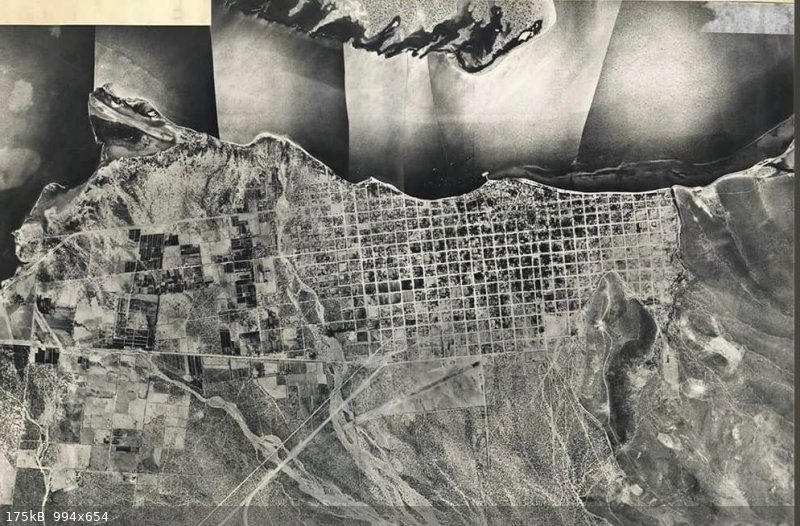
The public had demanded a reinforcement of the flimsy dam that was pushing the mountain waters more south (to create more real estate of course)
look at the image - everything south of 5 de Febrero to where Walmart is today used to be a flood plain
the dam pushing the waters to the Arroyo next to Walmart broke and flooded half the city
the impact of Hurricane Odile in 2014 was much more devastating - luckily with less loss of life
compare the stats if you like ($1.82 billion vs $100 million in damages):
https://en.wikipedia.org/wiki/Hurricane_Odile
surfhat - 10-5-2025 at 12:51 PM
All so true. Mucho Gracious for a hopeful lesson of what not to do.
Allowing building on any flood plane never appears to be an issue until mother nature has her say, as she will eventually do on her own time.
My long ago years of wintering at Pescadero in the 70's for a couple months to escape the Ca. cold???, haha, are ingrained in my mind for all the days
I am given.
Recalling Bill Walton and his trailer parked in what turned out to be a limited temporary space before arroyo water flow had its say.
Recalling John Phillips of the Mamas and Papas fame camping next door on the elevated bluff in his pickup truck camper and sharing his passion for
collecting sea shells the world over and spearing fish in front of the north side rock walls that he shared with all of us feral campers at the time.
Recalling a dear and ever treasured friend who farmed the ejido with organically grown fruits and herbs who made my times all the more invaluable.
Flats of organic grown strawberry's so close by was another gift to appreciate of all the days we campers at the time were given.
Thank you Ross. Your consideration and generosity was always appreciated.
My dear friends who invested in local properties deserve the same respect. We were all there for the same reason, whether feral camping or a property
with a view.
I cannot help but recall an early experience of pulling into Pescadero somewhat late at night and hungry after a long day on the road in the winter of
'75 and finding a restaurant on the highway still open after 9pm.
Fish tacos please. What I was fed was sardines from a can. Yes, it was a fish taco, so to speak.
Thankfully, that was a singular experience that I never came across anywhere in the fifty years since.
Memories are what each of us Baja lovers have in abundance.
The value of Baja Nomad to this ever loving Baja lover is unending thanks to our moderator and those who contribute positively to this site.
It is so easy to take the high ground by not engaging in what we all have too much of already in our daily lives.
Please all you Nomads, leave your political leanings elsewhere.
Please respect what Baja Nomads brings to us all.
Ideally, this site is a resource for preserving and appreciating a special place that we love with all of our hearts.
I have and never will come here for others political opinions. We all have enough of that in our daily lives to not bring it here.
If only....
I can dream and do every day of such an ideal where stripes of every color can agree on at least that one thing.
Our shared Baja love.
Life is surely grand and a gift to those who choose to venture south to Baja.
Thank you Doug for putting up with the disparate and
often times desperate voices from the extremes we all deal with
every day elsewhere.
This is not the only site that I monitor daily and hope for the
same consideration.
There is no right or left, blue or red, rep or dem, in my
appreciation of what Baja has freely given to all who venture
south.
Now back to the topic at hand with no apologies.
[Edited on 10-5-2025 by surfhat]
[Edited on 10-5-2025 by surfhat]
JZ - 10-6-2025 at 07:05 AM
I spent a lot of time in San Carlos Sonora in the mid 2000's.
My biggest topical storm memories are being there and it raining for three days straight in September.
Bajatripper - 11-19-2025 at 02:05 PM
A bit late to the topic, but one which I'm fairly familiar with even though I wasn't living in the city at the time. My family lived in La Paz some
years before Liza hit and continued to maintain childhood friendships over the years. By Liza's arrival, my peer group was in their late teens-early
20s.
It just so happened several of my friends were volunteers at the local Red Cross office in the neighborhood. It was more of a place to hang out than
anything else, but the volunteer positions led four of them to be accepted into a government program for nursing and became nurses as a career.
Interestingly, all four of them were male.
Anyway, enough backstory. When Liza arrived, my friends--being male--were among the front-line responders who had to gather the bodies and wrap them
in sheets hastily-made from fabrics commandeered from local stores before dumping them into one of the five 100-meter-long trenches excavated at the
Panteon de los San Juanes. Bodies were piled on top of each other, with lime being thrown on them as they went. The trenches are clearly marked (and
visible on Google Maps) and located in the back south corner of the graveyard.
Of course, such emotional trauma is bound to have consequences on a bunch of basically kids who were thrown into the fray of what was the city's
greatest and previously-unimaginable disaster. One of my friends--with whom I've travelled a bit--will talk about anything under the sun, whether he
knows anything about it or not. But the ONE subject he has NEVER shared ANYTHING about was his role in the body disposal in the days after the
hurricane.
The consensus among those I know who participated in the recovery efforts was that the official body count of the dead is way, way underestimated.
Undoubtedly, many bodies were buried in arroyo sands or swept out to sea. As now, La Paz had a lot of immigrants from the mainland who were (are)
pretty damn poor (the reason for migrating in the first place). So when someone offered to sell them arroyo-bottom cheap, it seemed like an
exceptional deal. Coming from wetter climates, where a river is a river year-round, many weren't savvy enough about local geography to recognize the
danger a dry arroyo represents. But it wasn't just that. I recall back in the late '80s seeing the rooftops and tinacos of what had been a
government-sponsored housing project in an arroyo outside San Jose del Cabo, the houses themselves buried up to their roofs in sand. Won't find any
sign of them today, it was a bad look and they were removed years ago. Too bad, I thought they served as a good reminder. And now I'm constantly
fascinated by some of the locations people--mostly foreigners, it appears--are building in the Cape Region these days...guess some lessons just have
to be re-learned.
Although it had sustained winds of over 140 MPH, it wasn't the wind that was so unusual about Liza. What made it a true freak-of-nature was the amount
of water it dropped over a very small area in a short amount of time. The Sierra de las Cacachilas, NE of the city, received something over 2 feet in
a matter of hours, as I recall. Much of that water accumulated in a large flat area at the exit of El Cajoncito, the arroyo from where most of the
rain came rushing out of the sierras. Whereas before the dike all the water leaving the sierras would have run down the various arroyos descending the
alluvial plain where La Paz is located, the dike (constructed in 1973) seeks to re-route the waterflow into one main arroyo (Walmart is on its edge
where it flows into the bay) and avoid the city entirely. The "old arroyos" now only funnel water that falls west of the dike.
Mexicans being like anyone else, rumors have persisted over the years that the dike was intentionally blown by the Army in an effort to save the
historic city center--where established Paceño families lived--sacrificing the new arrivals and less-affluent locals living there. Supposedly, people
heard what sounded not like a small dike giving way, but a loud explosion or explosions. The theory postulates that by diverting the accumulating
waters through the bottleneck north of Cerro Atravesado (one of its previous "natural" paths to the sea) and around the southern edge of the city, the
pressure would be relieved on the dike upstream, where a lake had formed in what had been a dry lagoon northeast of the city. By blowing up a southern
portion of the dike, the city center would be saved. Coincidentally, of the five main arroyos transversing what was most of La Paz at that time, the
largest is Calle 16 de Septiember, which formed the financial center of town at the time.
I once posted an article about this very event right here, on Baja Nomad, it's probably still around in the archives, for anyone wanting more-detailed
info on Liza.
An exceptional video I came across while researching the article that really summarizes Liza's damage well:
https://www.youtube.com/watch?v=3-uikA6ABrs
David K - 11-20-2025 at 01:09 PM
Gracias, Steve!