BajaNomad

How much tax to declare something?

BornFisher - 1-22-2012 at 09:21 PM

So if you have some goods to declare and actually go to the lane and go to secondary (traveling south), is there some actual percentage rate on stuff you bring down? Like are building materials different than an appliance? Is there some cut off dollar amount that is allowed? I can predict what people will say here (bribes), but if anyone has the facts, please let me know.? Gracias to those who have experience and reply.

BajaWarrior - 1-23-2012 at 07:08 AM

14%-17% is what you can expect to pay. You don't need original receipts but have each item listed and it's worth on paper. As far as the limit goes they have told me $3000 but some here will tell you $1000 U.S. Dollars because that is what they were told at the Border.

Keep 10% in you right front pocket though, if they indicate things could go quicker then your back on the road.

This is from a guy that built 3 homes in Baja and imported everything but the Brick and Slabs. Note that two homes were imported through Mexicali East Crossing and one over 10 years ago through Otay.

I have no experience importing at San Ysidro/Tijuana but I know you start like the other borders in the Declaration Lane to the right, and have Pesos to pay with at the Bank Window.


Fernweh - 1-23-2012 at 07:52 AM

Just found today on a different forum:

Clothing, television screens, appliances, alcohol and 200 other goods will no
longer be levied an import tax in Baja California Sur, after the declaration of
a Border Economic Zone covering the entire peninsula.
On Friday, President Calderon and his economy minister, Antonio Meade signed in
Tijuana a decree for the competitiveness and tariff reduction.

With this decree, coupled with the recent release from import duty of 204 other
items, products that come not only from America but from Asia may be had at
more competitive prices for local merchants.
Canned fish, articles for health care, clothing, footwear, big screens, wines
and spirits, among others, are products whose tariffs will be reduced and also
allow labeling at point of sale and not in the area input allowing further lower
marketing costs.
Short URL: http://peninsulardigital.com/?p=66199

CortezBlue - 1-23-2012 at 10:25 AM

I try to stop and pay when I "have to", in other words, I have a trailer full or my chevy avalanche has it all hanging out.

So my questions is, with my FM2, is there a dollar amount or list of goods that I can bring down without paying?

I am stressed praying for the Green Light God

DENNIS - 1-23-2012 at 10:42 AM

Quote:
Originally posted by Fernweh
Clothing, television screens, appliances, alcohol and 200 other goods will no
longer be levied an import tax in Baja California Sur,


Getting it into BCN is the problem. You WILL pay. Fees on used goods will be variable, but new goods will be taxed, like Chuck said above, 14 to 17% [maybe more...maybe less].
It's a waste of time and emotions to try holding Mexico to rigid rules and rates.

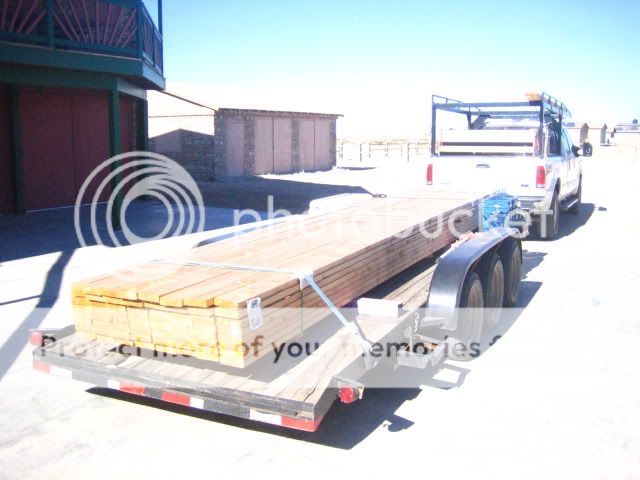
And.....see that trailer full of lumber above? It's not that simple anymore. They have put stringent restrictions on building supplies.

mcfez - 1-23-2012 at 10:42 AM

I am stressed praying for the Green Light God

:lol::lol::lol:

Been there too a few times. I have to agree...just pay and be happy!BajaWarrior is correct in my book...his numbers add up to what we had to dish out

DENNIS - 1-23-2012 at 10:45 AM

Quote:
Originally posted by CortezBlue
So my questions is, with my FM2, is there a dollar amount or list of goods that I can bring down without paying?


I have never heard of an allowance larger than 150 dollars. I have been told at the border that I get zero allowance because I'm not a National, despite my FM2.
It's The Mystery Zone.

BajaWarrior - 1-23-2012 at 11:01 AM

In the past we have only been given a $50 exemption for each of us. Last load hauled was the lumber for the decking (64@ 2"x6"x20') and that was one year ago and we entered at Mexicali East.

viabaja - 1-23-2012 at 11:17 AM

Everything is fluid at the border! Rules vary at each location. As Chuck says 14-17% is the range - usually. My FM3 used to get me a $150 exemption - last time it was $75. New rules I was told by the Aduana! Also as Chuck mentioned "Keep 10% in your right front pocket though, if they indicate things could go quicker then your back on the road." It can help!

SFandH - 1-23-2012 at 11:30 AM

Quote:
Originally posted by Fernweh
Just found today on a different forum:

Clothing, television screens, appliances, alcohol and 200 other goods will no
longer be levied an import tax in Baja California Sur, after the declaration of
a Border Economic Zone covering the entire peninsula.
On Friday, President Calderon and his economy minister, Antonio Meade signed in
Tijuana a decree for the competitiveness and tariff reduction.

With this decree, coupled with the recent release from import duty of 204 other
items, products that come not only from America but from Asia may be had at
more competitive prices for local merchants.
Canned fish, articles for health care, clothing, footwear, big screens, wines
and spirits, among others, are products whose tariffs will be reduced and also
allow labeling at point of sale and not in the area input allowing further lower
marketing costs.
Short URL: http://peninsulardigital.com/?p=66199


I wonder if this applies to individuals or just to manufacturers.

Here's the news story:

http://www.utsandiego.com/news/2012/jan/21/tp-lifting-of-imp...

In an action aimed at increasing the competitiveness of the Baja California region, President Felipe Calderón came to Tijuana on Friday and launched the Strategic Economic Zone by eliminating import duties on 200 products.

The move comes after years of clamor from the state’s business and political leaders. They have argued that Baja California businesses lose many Mexican consumers who are enticed across the border to stores with greater variety and lower prices.

“This will allow Mexican businesses to offer imported products at much more attractive prices, and this way we will fortify economic activity and generate more jobs for our people,” Calderón said during an outdoor ceremony held just yards from the San Ysidro border crossing.

The measures were outlined in the “Decree for the Competitivity and the Reduction of Tariffs of the Border Economic Zone,” signed by Calderón before the state’s top political and business leaders, including Gov. José Guadalupe Osuna Millán and Tijuana Mayor Carlos Bustamante.

The decree comes a month after the Mexican federal government slashed its high tariffs on 204 Chinese products. While the dropping of that trade barrier applies across Mexico, Friday’s decree is restricted to the states of Baja California, Baja California Sur and a portion of the state of Sonora.

Together, the actions will lead to lower prices for a range of goods, including clothing, shoes, canned fish and wine, Calderón said.

With creation of the new zone, “we now have an instrument to help us combat the flight of consumers that has afflicted us so strongly,” said Mario Escobedo Carignan, leader of a powerful umbrella group in Tijuana, the Business Coordinating Council. “What we hope is that they can find products here at the same price that they can find in the United States.”

Escobedo said Friday’s decree is only the first step toward increasing the region’s competitive strength. Future steps for the zone would include federal and state funds for businesses that bring new technologies to Baja California, as well tax breaks for key sectors such as aerospace and biotech, he said.

Business and political leaders in Baja California have been lobbying the federal government to establish the special zone, saying conditions at the border are far different from those in central Mexico, where shoppers don’t have the option of crossing into the United States. They had met with stiff opposition from business groups in central Mexico.

“For the president of Mexico to do this in face of huge political interests in other parts of Mexico is a big deal,” said Christina Luhn, director of the Mega-Region Initiative for the San Diego Regional Economic Development Corporation.

Surveys by the San Diego-based Crossborder Group, a market research firm, have shown that Baja California consumers who shop in San Diego County typically buy goods such as clothing, shoes and electronics. Kenn Morris, the group’s president and CEO, said shoppers spend about $200 million to $250 million a month in retail stores of San Diego and Imperial counties.

While the lifting of tariffs and import duties is likely to encourage more Baja California residents to shop in Mexico, it is not likely to eliminate cross-border commerce, analysts said.

“They’re not going to quit coming across the border, because they don’t have the variety of things and the same shopping experience,” Luhn said.

Martín Ramírez Urquidy, head of the economics department at the Autonomous University of Baja California in Tijuana, estimates that the new measures will lead to 8 percent to 10 percent less demand for products in the U.S. among Mexicans in the region.